Table of Contents
The Legal Foundation of PF Trust Trustee Liability in India
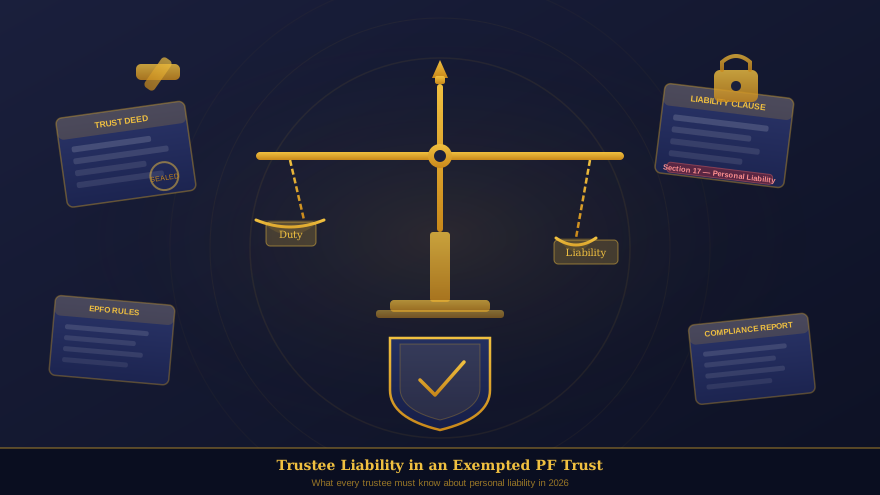
An exempted PF trust is a legally distinct entity, separate from the sponsoring employer organisation. The Board of Trustees holds the trust corpus in a fiduciary capacity, governed by the trust deed, the Employees' Provident Funds and Miscellaneous Provisions Act 1952, and the EPF (Exempted Establishments) Rules. PF trust trustee liability in India flows directly from this fiduciary relationship — trustees are not administrative figureheads; they carry legal responsibility for ensuring that the trust is managed in the best interests of its beneficiary members and in full compliance with the regulatory framework at all times.
Unlike company directors who can often rely on the corporate veil to limit personal exposure, trustees face direct personal liability for fiduciary failures. If the trust corpus suffers a measurable loss as a consequence of a trustee decision — an investment in a non-approved instrument, a failure to credit the statutory interest rate, or a governance breakdown that allows violations to persist — EPFO can pursue recovery from individual trustees personally. This is not a theoretical risk; EPFO enforcement proceedings following significant compliance failures in exempted trusts have resulted in personal demands against trustees in several documented cases across India.
The Three Principal Areas of PF Trust Trustee Liability in India
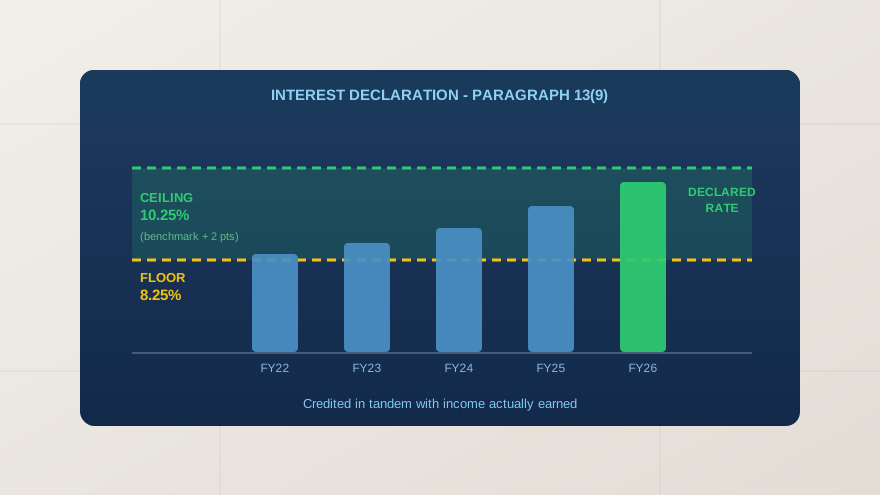
Interest rate shortfall is the highest-frequency source of PF trust trustee liability in India. When a trust credits a lower interest rate than the EPFO-declared statutory rate for any financial year, the trustees are collectively responsible for making good the entire shortfall, with applicable penal interest on the delayed amount. If the trust corpus is insufficient to fund the shortfall — as can occur in trusts that have experienced investment losses or mismanagement — EPFO has the authority to demand recovery from individual trustees personally, without restriction to their trustee role.
Investment violations represent the second major liability area. A trustee who votes in favour of a non-approved investment — or who, having the means to know the investment was non-compliant, fails to raise a formal objection in board proceedings — shares in the fiduciary liability for any resulting harm to the corpus. The applicable standard is that of a prudent trustee: a person with reasonable familiarity with the EPF investment framework who exercises appropriate care and diligence in every investment decision.
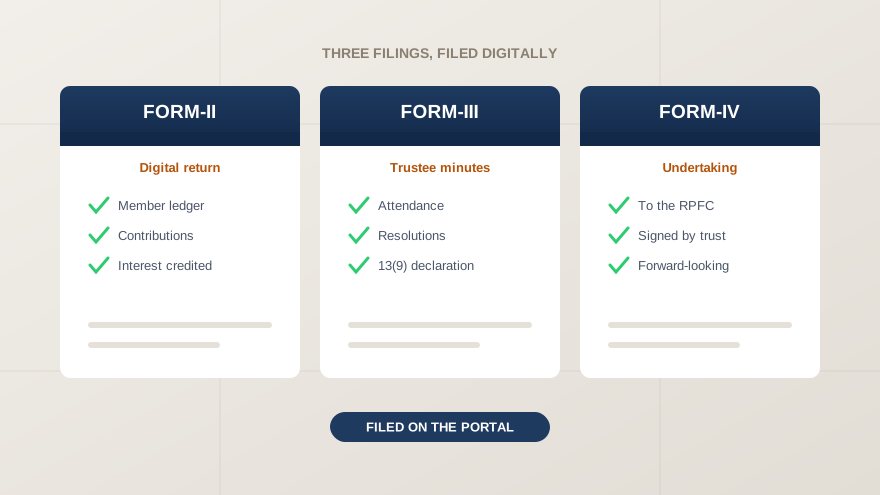
Non-compliance with the October 2023 SOP creates a third and increasingly significant liability dimension. As outlined in our comprehensive guide on EPFO SOP 2023 compliance, the SOP formalises trustee obligations around meeting frequency, documentation quality, and timely filing. A trustee who consistently fails to attend meetings, fails to ensure minutes are properly maintained, or allows filings to lapse without intervention faces personal exposure even in the absence of a direct financial loss to the corpus.
How Trustees Can Protect Themselves
The single most important protection available to an individual trustee is the formal meeting record. When any decision is made with which you disagree or about which you have material concerns, have your dissent specifically and unambiguously recorded in the Board minutes — naming the decision, your objection, and your reasoning. A signed, dated dissent on the record is your primary legal protection if that decision is subsequently scrutinised by EPFO. Never simply abstain from a vote without recording your reason; an unexplained abstention provides no protection from collective liability.
Second, insist formally on receiving a quarterly compliance report. Every trustee has both the right and the professional obligation to be informed about the trust's investment ratio, interest crediting status, and filing compliance on a regular basis. If the trust administrator or fellow trustee refuses to provide this information, document that refusal formally — it is itself a governance red flag that should be escalated to the sponsoring employer's senior management or, if necessary, to EPFO directly.
Third, understand where your trust stands against the violation categories defined in the October 2023 SOP. Our guide on EPFO SOP 2023 violation categories A, B, and C explains the full enforcement framework and the consequences at each level. Proactive knowledge of your trust's compliance position enables you to push for corrective action before violations compound.
The Evolving Liability Environment in 2026
PF trust trustee liability in India is increasing in practical terms as EPFO's monitoring and enforcement capabilities are strengthened year by year. The integration of digital contribution records, automated investment statement analysis, and centralised inspection management systems means that discrepancies are identified more quickly, enforcement is initiated with shorter advance notice, and individual trustees have less time to respond before escalation occurs.
The practical response for every trustee is to invest in the compliance infrastructure that makes proactive oversight possible: sound governance structures, regular trustee meetings with proper documentation, and technology that provides real-time compliance visibility rather than retrospective reporting. MyPF Software gives trustees a live compliance dashboard, automated alerts for investment ratio breaches and crediting deadlines, and a complete audit trail of every transaction and governance decision. Contact our team to find out how we can help your Board of Trustees remain fully protected in today's compliance environment.
Ready to simplify your PF trust compliance?
MyPF Software helps exempted PF trusts stay inspection-ready, automate filings, and manage investments — all in one platform built for India.